The Verdict
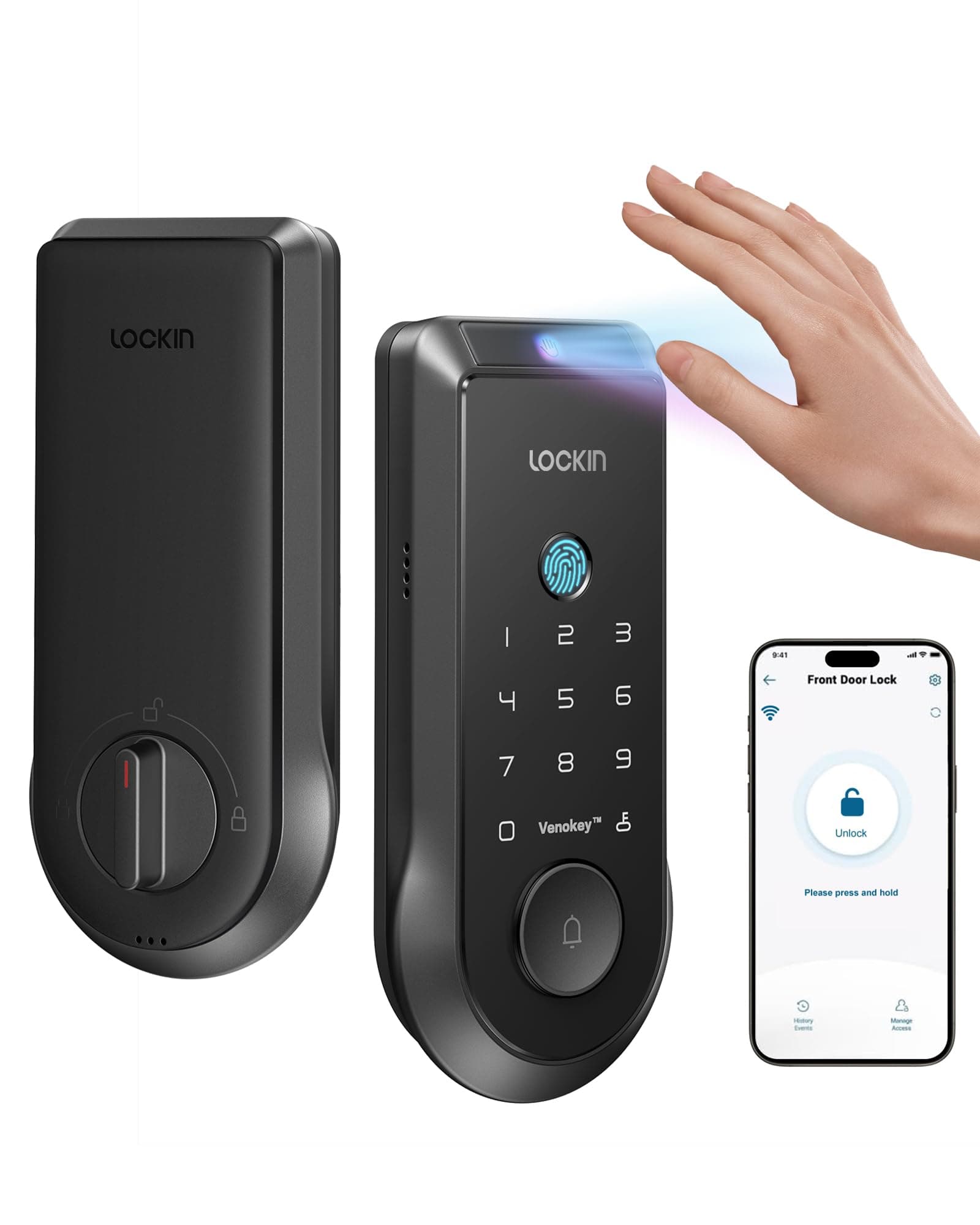
The Lockin Venoris is a genuinely impressive piece of hardware that delivers on its core promise: fast, reliable, touchless entry. Its palm vein recognition is a legitimate step-up from the often-finicky fingerprint sensors on competing smart locks. For users prioritizing secure and convenient access over deep smart home integration, the Venoris is an excellent choice with a high-quality build and reliable performance.
However, the social media hype surrounding this lock is dangerously misleading. The viral videos showcase a futuristic, unreleased concept model with features the Venoris simply does not have. For smart home power users, its current Matter integration is disappointingly basic, limiting its potential in complex automations.
Despite the confused online narrative, the product itself stands on its own merits. It solves the primary problem of keyless entry with remarkable efficiency.
What Went Viral
The Lockin brand exploded on TikTok after CES, with videos racking up millions of views. Creators were captivated by the "Lockin True AI Smart Lock V7 Max," a concept product featuring "AuraCharge" — an optical wireless power system using infrared light to eliminate batteries entirely. Videos showcased this sci-fi tech, along with dual touchscreens and 3D facial recognition, billing it as the future of home security.
The problem? The product you can actually buy, the Lockin Venoris (ASIN B0F93HXS8P), has none of those futuristic features. It's a battery-powered lock with palm vein and fingerprint scanning. The viral wave is for a product that doesn't exist for consumers yet, creating a significant gap between social media expectation and retail reality.
What the Comments Actually Say
Once you filter out the noise about the concept model, real user feedback for the available Lockin locks is overwhelmingly positive. There is no significant recent discussion on TikTok or Reddit about the Venoris model specifically, but older threads and reviews for the nearly identical non-camera version paint a clear picture.
An Amazon reviewer for the Venoris model states, "The palm recognition feature is incredible and easily outperforms any other unlocking method I’ve used. It’s extremely accurate, and both locking and unlocking are lightning fast."
This sentiment is echoed in older Reddit discussions on r/homeassistant, where users described the lock as "working great" and "SUPER quick." The primary praise consistently centers on the speed and reliability of the palm and fingerprint scanners. Users also appreciate the built-in Wi-Fi, which eliminates the need for a separate bridge. The most common technical complaint is the limited functionality of its Matter integration.
Technical Comparison
Compared to a standard smart lock from a brand like Schlage or Yale, the Lockin Venoris offers a distinct technological advantage. Most conventional smart locks rely on a numeric keypad, a physical key, or a basic fingerprint reader that can be unreliable with wet, dirty, or scarred fingers. The Venoris's palm vein recognition scans the unique vein patterns inside your hand, offering a more secure and consistent touchless method.
Furthermore, many competing smart locks require a separate, plug-in Wi-Fi or Z-Wave bridge to connect to your network for remote access. The Venoris has Wi-Fi built directly into the unit, simplifying installation and reducing clutter.
While standard locks are catching up, the combination of multiple advanced biometric options and integrated Wi-Fi at this price point makes the Venoris a strong contender.
The Catch
The primary catch isn't a hardware flaw, but a software limitation for smart home enthusiasts. While the lock is compatible with the Matter smart home standard, its implementation is minimal. It can only execute basic lock and unlock commands. It does not report other crucial data, such as battery level, door open/closed status, or which user unlocked the door, back to your smart home hub like Home Assistant or Apple Home. This prevents the creation of more advanced automations, like turning on lights when you arrive or sending an alert if the door is left ajar.