The Verdict
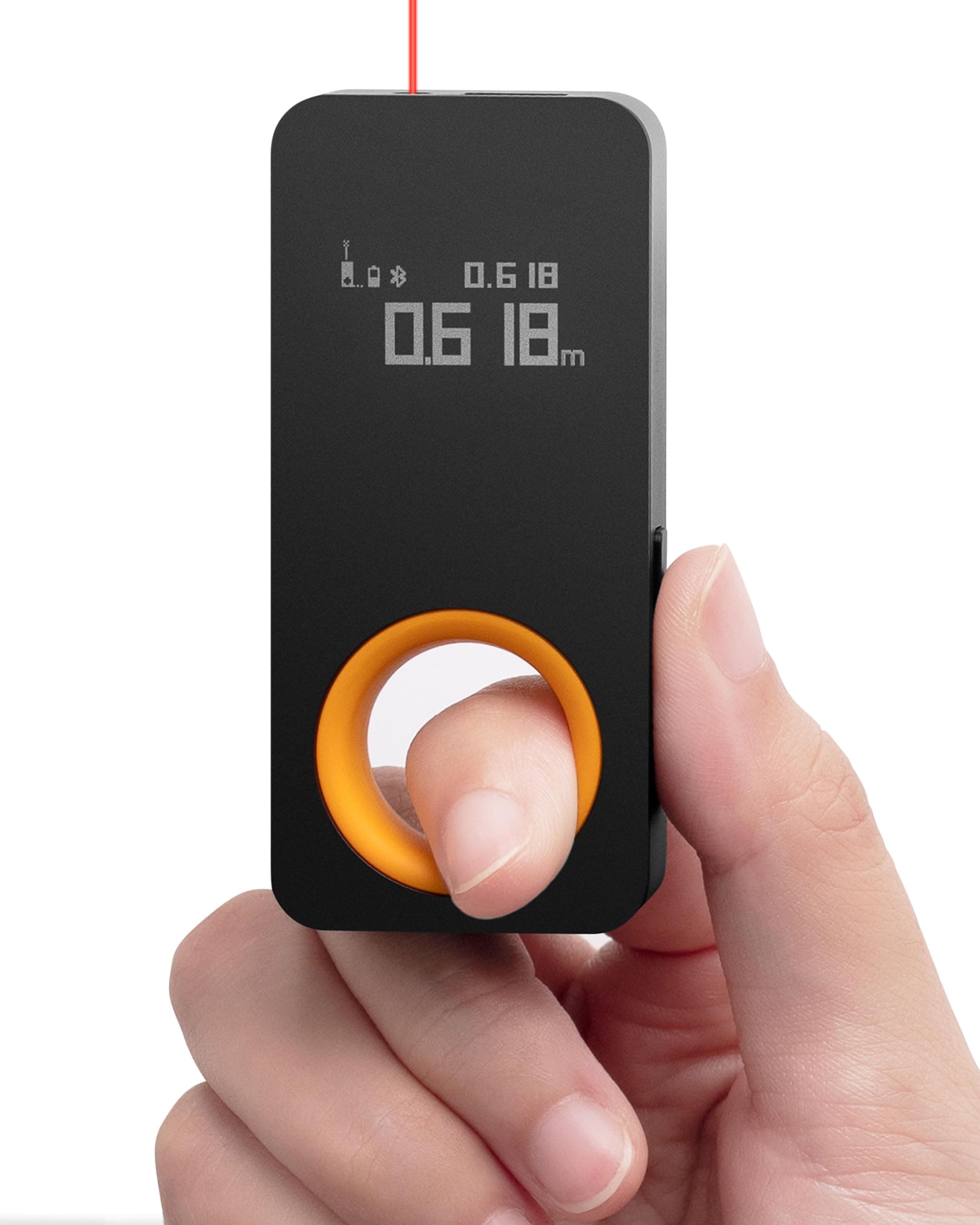
The HOTO EDC Laser Measuring Tool is a triumph of industrial design that mostly delivers on its promise of convenient, app-connected measurements. For the average homeowner planning furniture layouts or grabbing quick room dimensions, its one-button operation and sleek, pocketable form factor are a genuine upgrade from a clumsy tape measure. It feels like a tool from the future.
However, for tasks demanding true precision, proceed with caution. While many users find it perfectly accurate for their needs, detailed reports of consistent measurement errors—without any way to calibrate the device—raise a significant red flag. It earns a 3.5/5 for successfully making measuring faster and smarter for casual use, but it may not be the right tool for a professional job site where every millimeter counts.
What Went Viral
With over 10 million views, the HOTO Laser Measure flooded home improvement and tech gadget TikTok feeds. Videos showcase its minimalist, single-button design and bright OLED screen, contrasting it sharply with old-school metal tape measures. Creators demonstrated its core appeal: instantly capturing distances up to 98 feet and, more impressively, syncing that data via Bluetooth to a companion app. The ability to draw floor plans on your phone, annotating photos with precise measurements, made it an irresistible gadget for DIYers and tech enthusiasts looking to modernize their toolkit.
What the Comments Actually Say
Sentiment across platforms is mixed, leaning positive, but with critical details in the fine print.
TikTok: Users on the platform are overwhelmingly positive. Comments frequently praise it as a "Cool little gadget. Very accurate" and "Shockingly accurate." The ease of use and compact size are recurring themes, with one user noting that even professional contractors were impressed and asked where to buy one.
Reddit: Discussions about the laser measure itself are generally favorable, with users who own it reporting that it works well. However, the broader conversation around the HOTO brand is less rosy. Multiple threads in communities like r/UsbCHardware and r/Tools raise concerns about the quality and customer service for other HOTO products, which casts a shadow on the brand's overall reliability.
YouTube: This is where the most detailed critiques emerge. While most reviewers praise the award-winning design, fast measurements, and useful app features, a critical review by the channel Beat the Bush found significant accuracy problems.
The reviewer stated his unit was consistently off by about 1/8 of an inch, double the advertised ±1/16 inch accuracy. He noted the lack of an in-app calibration feature was a major oversight, leading him to conclude he "cannot recommend this device" for precision work.
Other minor complaints include the screen appearing slightly hazy and the app's tendency to display measurements in decimals rather than fractions, which is less intuitive for some builders.
Technical Comparison
Compared to a standard tape measure, the HOTO Laser Measure excels at speed and convenience for long-distance, single-person jobs. Measuring a room's length or ceiling height is instantaneous. The app integration for saving measurements and creating floor plans is a capability that traditional tools simply can't match.
However, a classic tape measure remains undefeated for certain tasks. It requires no batteries, provides tactile feedback, and is inherently accurate for measuring physical objects directly, without needing a wall or 'border' to bounce a laser off of. For precise carpentry or small-scale projects, the reliability of a physical tape is often preferred.
The Catch
The core promise of any measuring tool is accuracy, and that's precisely where the HOTO device falters for serious users. While it may be sufficient for casual estimates, the evidence of it being consistently inaccurate by a margin double its advertised tolerance is a deal-breaker for any work where precision is paramount.
The inability to calibrate the device means users are stuck with whatever level of accuracy their specific unit has out of the box. This transforms it from a reliable instrument into a convenient, but potentially flawed, estimation tool.