The Verdict
The BestQool Pro300 Red Light Therapy Panel earns a rare distinction in the viral wellness space: it largely lives up to its claims. While not without its flaws, particularly concerning out-of-the-box usability, it delivers professional-grade specifications—high irradiance, four effective wavelengths, and a large treatment area—at a price point that significantly undercuts premium competitors. For serious biohackers or anyone looking to invest in a powerful at-home red light therapy system without paying the exorbitant 'pioneer' tax of brands like Joovv, the Pro300 represents the best value on the market today.
What Went Viral
The BestQool Pro300 surfed a wave of TikTok interest in bringing professional-grade wellness treatments into the home. Videos with over 735,000 collective views showcase users unboxing the large, impressive panel and integrating it into their daily routines for a host of benefits. Creators frame it as a one-time investment that replaces expensive spa visits, promising everything from accelerated muscle recovery and reduced joint pain to enhanced collagen production for glowing skin. The narrative is compelling: why pay for individual sessions when you can own a powerful device for daily use? The visual of a large, bright red panel combined with scientific-sounding terms like 'photobiomodulation' and 'mitochondrial ATP' gave the trend an air of legitimacy that resonated with the wellness-focused community.
What the Comments Actually Say
Beyond the sponsored posts, a consensus emerges from real-world users on platforms like Reddit and YouTube. The overwhelming sentiment is positive, centering on the panel's exceptional value proposition.
Reddit users in the r/redlighttherapy community frequently praise Bestqool for offering similar power and effectiveness to high-end panels at a fraction of the cost. Many report tangible benefits, including relief from knee pain, improved skin clarity, and reduced inflammation in arthritic hands.
YouTube reviewers echo this, with multiple in-depth analyses concluding the Pro300 delivers more than expected for its price. They highlight the verified irradiance levels, dual-chip LED technology, and the inclusion of four wavelengths as key differentiators from cheaper, less effective devices. One reviewer noted the Pro300 is significantly cheaper than a comparable Joovv panel while offering similar or even better irradiance.
However, the feedback isn't universally glowing. A recurring criticism points to a build quality that feels less premium than its expensive rivals. Some Reddit commenters have reported fan failures on other Bestqool models after 12-18 months of use, raising questions about long-term durability. An Amazon reviewer also pointed out a major usability flaw with the included mounting hardware.
Technical Comparison
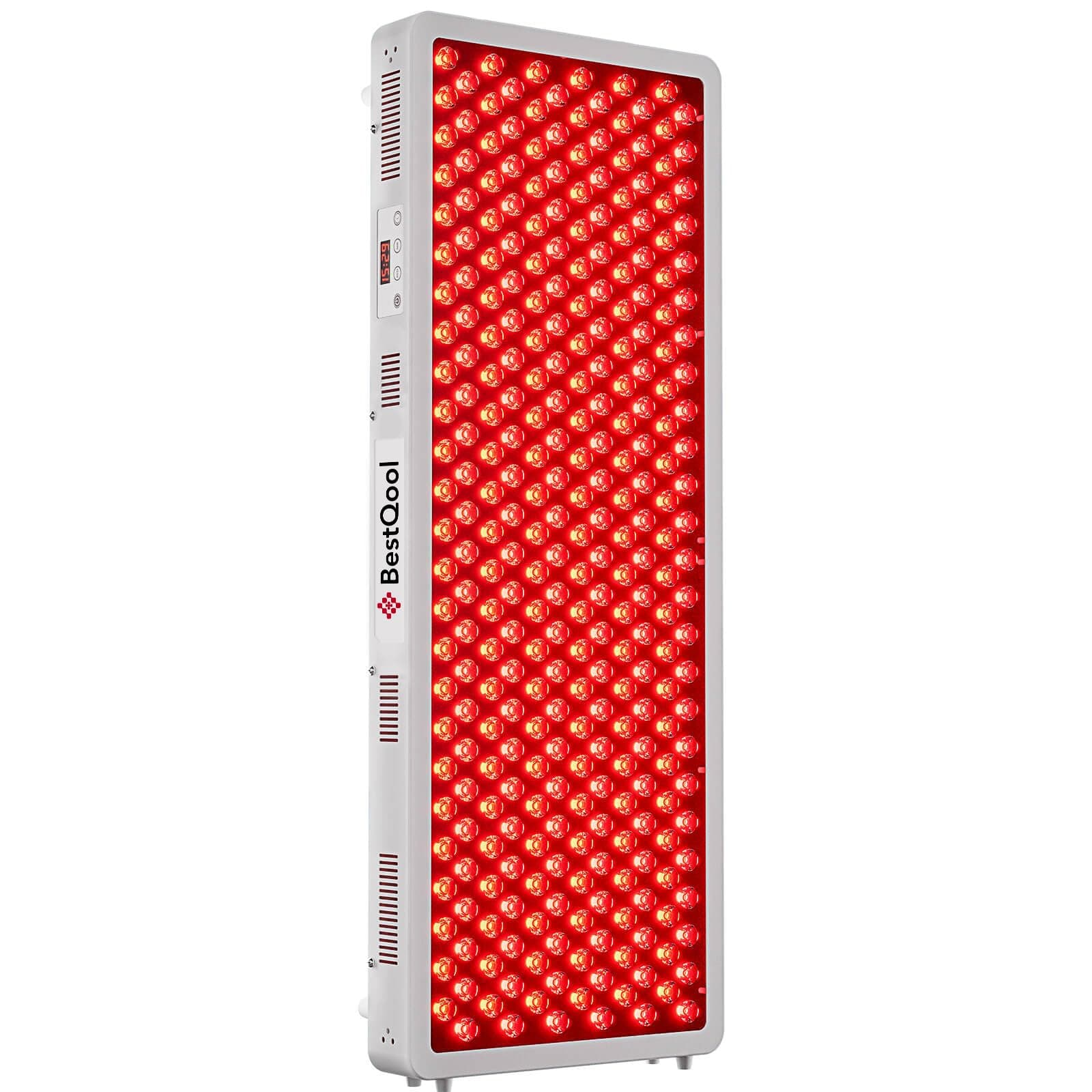
The Pro300's spec sheet is its strongest asset. It features 300 dual-chip LEDs that emit four distinct wavelengths: 630nm and 660nm (red light) for skin health and surface-level healing, and 850nm and 940nm (near-infrared) for deeper tissue penetration, muscle recovery, and joint pain. Its claimed irradiance of over 100mW/cm² at 6 inches is a critical metric, indicating a high dose of light energy is delivered to the body, which is necessary for therapeutic effects. This level of power is comparable to what you'd find in a clinical setting or from brands that charge two to three times as much.
The standard, cheaper red light devices flooding Amazon often lack verified irradiance numbers, use fewer wavelengths, and have a much smaller treatment area, requiring multiple, lengthy sessions for minimal benefit. The Pro300's modular design, allowing users to connect multiple panels, also positions it as a scalable, semi-professional system rather than a simple consumer gadget.
The Catch
The most significant issue, highlighted by a top critical review on Amazon, is that the Pro300 is not truly functional out of the box. The panel is heavy and tall, making it unsafe to simply prop against a wall. The included mounting solution is a 'concoction' of ropes and cables designed for hanging on a door, which many users find impractical or incompatible with their space. To use it effectively and safely as a standing, full-body panel, you almost certainly need to purchase the separate floor stand, which can cost nearly $300—a substantial hidden cost that isn't immediately apparent from the TikTok videos.